Some landscape designers have a habit that looks lazy and isn't. When a new campus or park opens, they hold off on paving the walkways. They plant grass, wait a season, and watch where people actually walk. The worn lines in the lawn show them where the paths belong, and that's where the concrete goes.
The paths that end up empty are usually the ones somebody drew on a plan without watching anyone walk.
Most agency AI rollouts are drawn on a plan. The principal picks a tool, sends the login and a training link, and maybe books a lunch-and-learn. A week later the same questions come back, and a month later the usage report is mostly blank. It's tempting to call that resistance. It usually isn't.
Producers aren't against it
A producer who skips the AI training isn't making a statement about technology. She's protecting her calendar. Nobody connected the tool to a part of her week she'd happily give away, so it became one more item on a list that was already too long.
One agency owner told me he'd given his whole team an online AI course and, by his own count, almost nobody used it. Some of his people on a paid team plan had also decided the tool had gotten worse and drifted back to personal accounts, which is exactly how Shadow AI starts. His team wasn't lazy, and it wasn't afraid of AI. The rollout gave them nothing to hold on to, and that's where the fix has to start. The villain here is the rollout, never the producer.
Move one: pave where they already walk
The fix starts where the landscape designers start. Don't choose the first AI job for your producers. Ask them which part of the week they'd hand off first if they could.
Give them a short list to react to rather than a blank page. I did this recently with a small Medicare team. Three options went on the table, and they picked a call scribe, because cutting and pasting notes after every call was the chore they liked least. Nobody had to be sold on it. They already wanted that job gone.
That chore is the worn line in the grass. It's where they're already walking, so it's where adoption holds. A use case picked for them, however sensible, is a sidewalk nobody asked for. Once they've chosen, walk that one workflow start to finish the way it really happens before you change anything. That's the first move of the Walkdown, the method I use with clients.
Move two: put a name on it
That Medicare team's build stalled anyway, and not because anyone lost interest. It was waiting on an answer from the agency's IT contractor. A week later the team was asking whether they'd still be uploading call files by hand. The interest was still there. Nobody owned getting the answer.
Every AI workflow needs a named human owner. The owner reads what the AI produces before it reaches a client, and in a build session last month I put that part plainly: someone reads everything the AI writes before it goes to another human being. The second half of the job is the one agencies forget. When the build hits a wall, the owner is the person whose job it is to get it moving again.
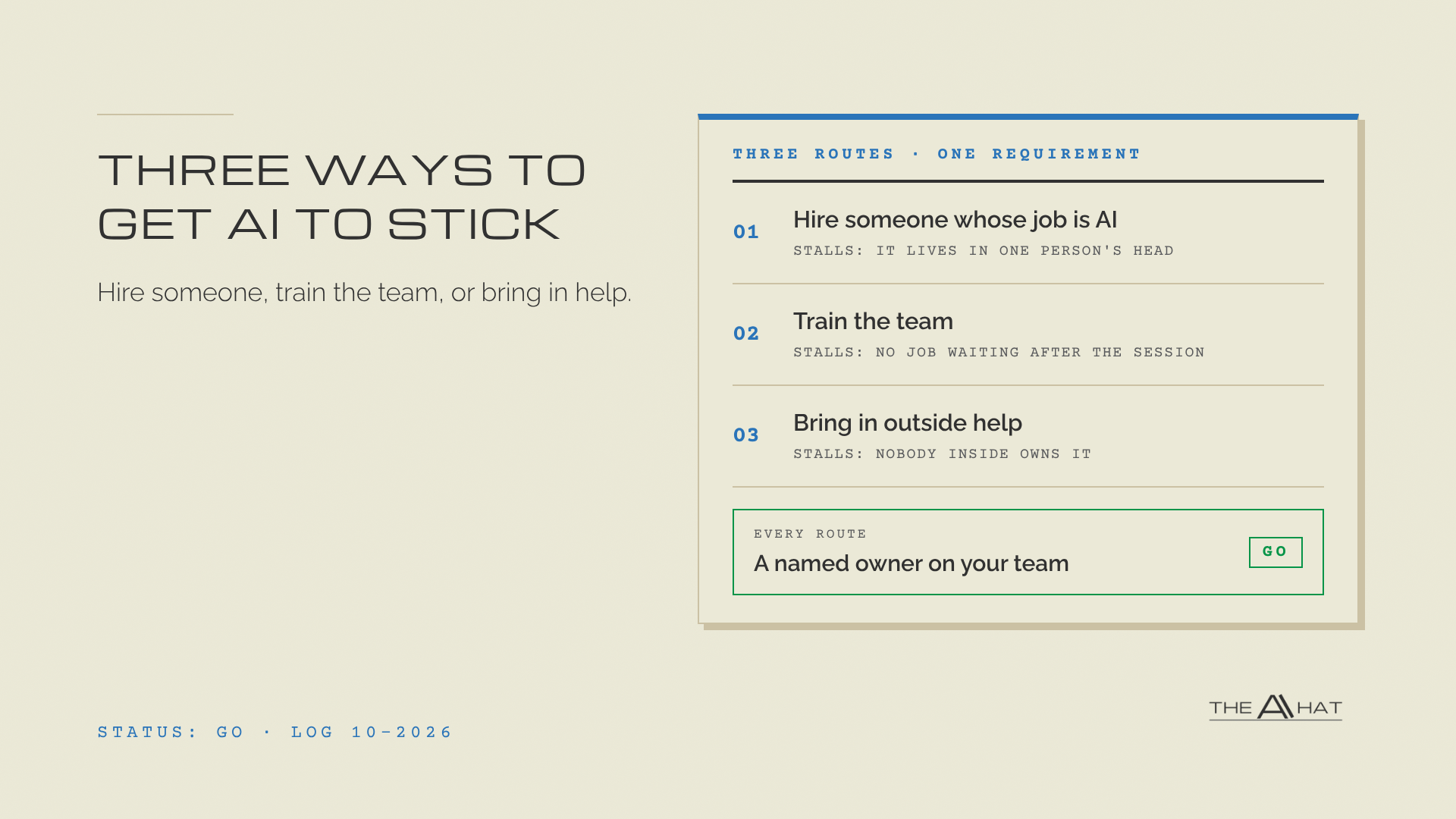
The owner doesn't have to be the principal, and often isn't. It can be the producer who hated the task most. That's a Digital Crew in its smallest form: one seat, one job, and a name next to it.
Move three: ask the people doing the work
The last move is the one almost every rollout skips. After a few weeks, ask the producers whether it helped. Ask them directly, rather than reading the vendor's dashboard or counting logins.
This is Check it, the last move of the Walkdown. You verify that the workflow does what you specified, and then you validate it with the people using it. If they say it didn't help, it goes back to the start and you walk the work again. A no tells you something you needed to know.
It also changes how the whole thing feels from the inside. A producer who gets asked whether something helped, and then sees the answer change what happens next, stops treating AI as something being done to her.
What to do before the season
If you run a Medicare shop, AEP is about to take over the office. The team I mentioned expects build work to stop for about two months, and that's normal. Why Insurance AI Pilots Stall covers what happens to pilots launched right before the season.
You can still make the first move now. Ask the question this week: which part of your week would you hand off first? Write down the answers and pick one owner. Then build after December 7, while everyone still remembers exactly which chore hurt the most. Commercial and benefits agencies don't have to wait.
A mandate can get you logins. The habit comes from the chore they picked, the name next to it, and the question you ask a few weeks in. If you'd like help finding the first workflow your producers would hand off, book an AI strategy call.
Frequently asked questions
Should we make AI use mandatory for producers? You can require a login, but you can't require that it helps. A usage target measures activity. One workflow the team picked gives them a reason to come back on their own.
What if producers are already using their own AI accounts? Then they've shown you where they already walk. Ask what they use it for before you ask them to stop, and give the most useful of those jobs a sanctioned home. The Shadow AI Governance Launchpad has an amnesty email and a short survey for that conversation.
Who should own the first AI workflow? Someone close to the work who will read every output before it reaches a client and has the standing to chase a blocker, like a question for IT. That's often a producer or a service lead rather than the principal.