It's 6:47 on a Tuesday evening. Your best producer - the one clients ask for by name - is still at her desk.
She's not on the phone. Nobody is buying anything. She's re-keying quote data into the management system because it doesn't talk to the rater, and after that she owes the CRM three days of updates, and after that she can finally write up the follow-up notes from a meeting that happened before lunch.
Swap her out for a sales rep, a marketer, an account manager. Different software. Same 6:47.
I call it Admin Drag. And naming it is the dangerous part - because now you'll start counting.
What is Admin Drag?
Admin Drag is the share of the work week your best people lose to work they were never hired to do: the data entry, the meeting notes, the status updates, the document assembly, the follow-ups that surround the actual job. For most teams, it's most of the week. In the rooms I work with, the number lands somewhere around 70 percent.
Seven of every ten working hours, spent on work that appears nowhere in the job description.
I didn't set out to coin a term. I just kept hearing the same complaint wearing different costumes. The insurance agency called it paperwork. The sales floor called it CRM hygiene. The marketing team called it status meetings. Same villain, different jacket - expensive, talented people doing transactional labor while the work only they can do sits and waits.
Want to see yours? Pull up yesterday's calendar for your highest-paid, most client-facing person and walk it hour by hour. Count the hours that touched a client, a prospect, a claim, a campaign, a real decision. Now count everything else. The everything else is their Admin Drag.
Your own team's version of that number is about three minutes away: take the AI Opportunity Score.
What Admin Drag actually costs
Start with the payroll math, since it's the easiest to see. When someone you hired for judgment and relationships spends most of the week on transactional work, you're paying a specialist's salary for a clerk's output. You hired a hunter. You're paying for data entry.
The quieter cost is attention. Admin work doesn't just eat hours - it fragments the hours that survive. A producer who has touched eleven screens before lunch does not bring her best brain to the two o'clock client call. She brings what's left.
And then there's the cost that shows up last, usually in an exit interview. Nobody quits because the work is hard. People quit because the work is beneath them and nobody seems to be fixing it. Your best people feel the drag first. They're the ones with somewhere else to go.
The three faces of Admin Drag
Admin Drag almost never introduces itself by name. It shows up wearing one of three faces, and you probably recognize at least one of them from your own building.
Pilot Purgatory
Your organization tried AI. There was a pilot, maybe two. A demo that impressed everyone, a rollout that reached no one. MIT researchers have put the failure rate of enterprise AI pilots somewhere around 95 percent, and having watched a lot of these up close, I can tell you the pattern behind the number: the pilot automated a task without redesigning the work around it. If your team has a pilot that never scaled, you're standing in Pilot Purgatory. The drag is still there. Now it has a software bill attached.
The Toggle Tax
Count the tools your team touches in a day. The CRM, email, the calendar, the proposal tool, the management system, the spreadsheet somebody built in 2021 that quietly glues it all together. Every switch costs a little time and a little focus, and the switches run into the hundreds per day. That compounding cost is the Toggle Tax - the most invisible face of Admin Drag, because no single toggle ever looks expensive.
Shadow AI
Here's the face that deserves a leader's full attention. Your people are already using AI to cope with the drag. They're pasting client information into personal chatbot accounts because the paperwork is crushing them and nobody handed them a sanctioned way out. That's Shadow AI - a symptom of Admin Drag and a genuine governance risk at the same time. Banning it doesn't work. Ignoring it works even less.
Why the usual fixes fail
The instinct is to buy something. A new tool, a new integration, an AI feature bolted onto the stack you already have.
That instinct is exactly why Pilot Purgatory is so crowded. Bolting AI onto a broken workflow just helps you do the broken thing faster.
The fix isn't a tool decision. It's a design decision - and it has an order of operations. Redesign the work before you deploy AI. Map what your people actually do all week. Decide what a human should own and what a governed agent should take. Then, and only then, build.
The fix: a Digital Crew
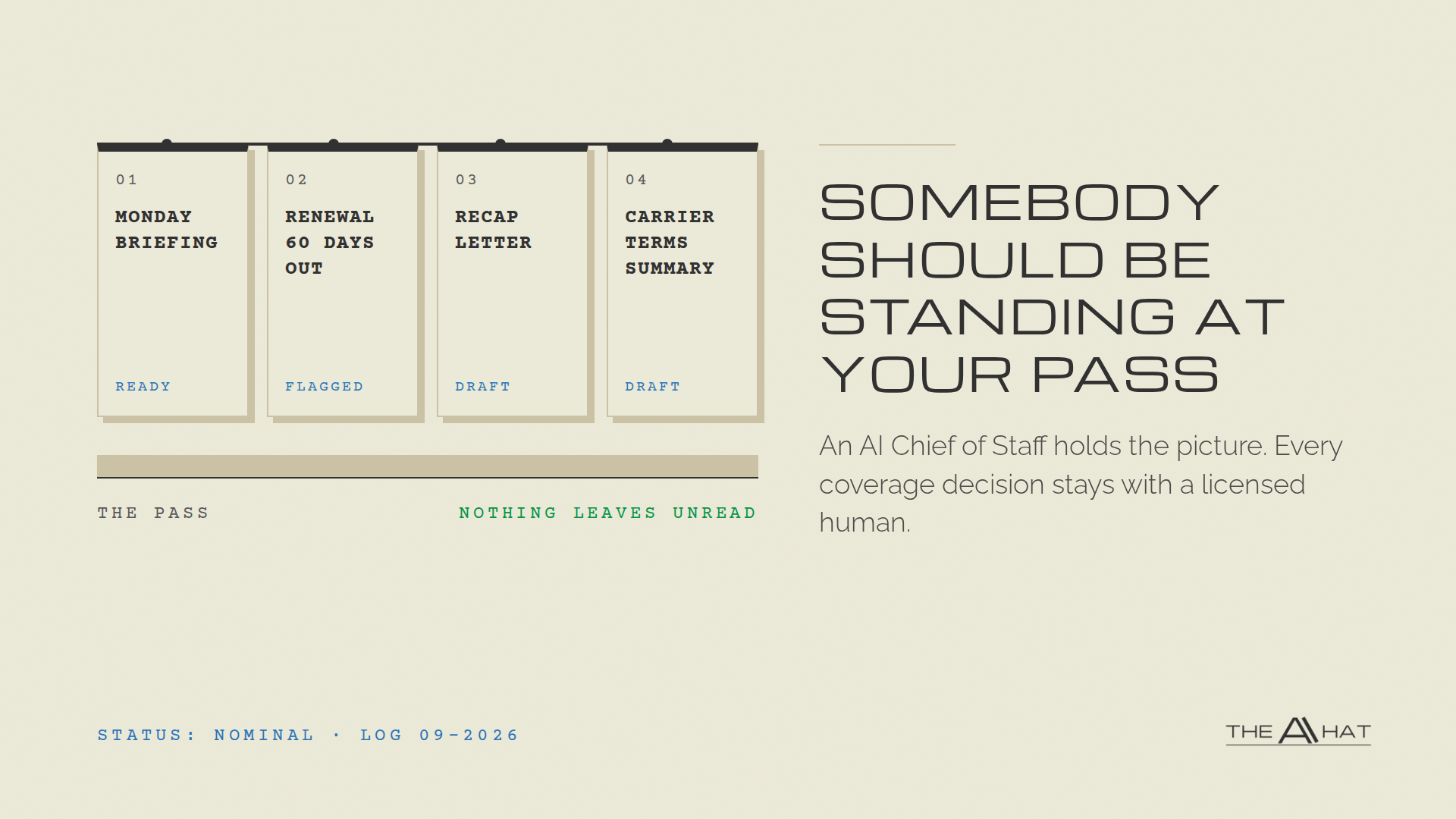
Once the work is redesigned, the answer to Admin Drag is a Digital Crew: a governed team of AI agents that takes the busywork so your best people get back to the work only they can do. Not one all-purpose assistant that does everything badly. A crew, with roles. A Scout that finds and qualifies. A Scribe that handles the notes, the CRM updates, and the follow-ups. A Coach that briefs your team before they walk into the room.
The method I use to get there has three stages. Illuminate the Shadow - find out what your people are actually doing all week, including the AI use nobody sanctioned. Build Your First Agent - pick one high-drag workflow and put a governed agent on it, with a human owner. Scale the Crew - expand role by role from there.
When Nevco Sports brought me in for their national sales meeting, we spent a keynote making the case and then four hands-on hours building first agents with the sales team. What their leadership talked about afterward wasn't the technology. It was that the team finally understood how to take the daily administrative drag off the people they pay to sell. Your industry may look nothing like theirs. The drag is the same shape everywhere.
Find out where your team stands
Admin Drag is measurable, and the fix has a sequence. The place to start is knowing your number: how many hours a week your team spends on work a crew member could carry. The AI Opportunity Score gives you that in about three minutes, then gets you a starter crew member built for the biggest one.
Your people are brilliant. They're just buried. Get your score, see where the hours are going, and let's start un-burying them.